
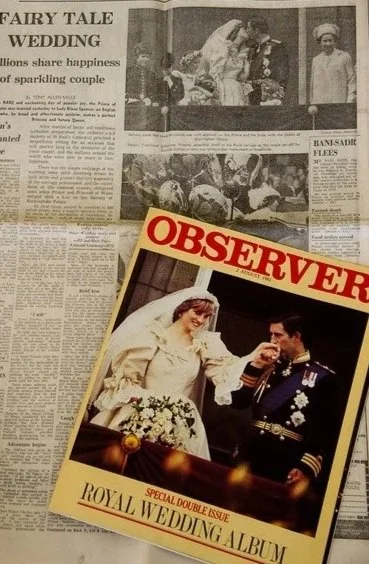
On the 31st August 1997, Her Royal Highness, Diana, Princess of Wales died in a tragic car accident in Paris. Diana was a beloved member of the Royal Family and at the time of her death, the most photographed woman in the world. Global media followed her almost nonstop and the world was in mourning following her death. The reaction was unlike anything the modern world had seen for a public figure. It felt more like the loss of someone personally known to millions. Outside Kensington Palace, flowers piled high, stretching for miles. The scent of those flowers reportedly lingered for weeks. Similar scenes appeared at Buckingham Palace, embassies, churches and city squares worldwide - London, New York, Paris, Sydney, Cape Town, and beyond.
She represented warmth, humanity, and rebellion against cold formality, and her death felt cruelly sudden and unfair. Some sociologists later described it as a rare instance of global collective mourning in real time. What was apparent is that the grief wasn’t confined to the monarchists or the UK. It crossed class, age, nationality, and politics. When she died, people mourned not just a woman, but the idea of her.
In 2016, a year heavy with celebrity deaths, we lost many beloved musicians, actors and people from across sport, art, and culture. The list was endless, seemingly every day: David Bowie, Prince, George Michael, Leonard Cohen, Sir George Martin, Alan Rickman, Carrie Fisher, Debbie Reynolds, Gene Wilder, Muhammad Ali, Harper Lee, Victoria Wood, Caroline Aherne, Terry Wogan, Paul Daniels, and Ronnie Corbett. Many of these names were not just famous, they were part of everyday British life: Christmas TV, radio voices, comedy rewatches, and childhood heroes. I remember being particularly hard hit by David Bowie and George Michael, two of the world’s most iconic musicians, their songs filling every part of your life with memories and sentiment.
We form one-sided relationships with public figures. We don’t know them, but their work is with us - in our headphones, on our screens, in our literature, and in all the moments tied to who we were at the time. Your brain stores this as familiarity and emotional safety. When they die, it feels like losing someone from your own story. They anchor time and identity and represent eras of our lives - our first crush, our first concert, afternoon cinema, soundtracks to our teens. Their death quietly says that a chapter is over and this can trigger grief from our own past, not just grief for them. Death can also be contagious in a good and bad way when news coverage loops it, social media fills with tributes, and everyone shares their memories. It feels validating and intensifies the feelings that you’re not alone, and that matters to your brain. If you are affected by celebrity deaths it doesn’t mean you’re being silly. It means you’re being human - emotionally literate, that art mattered to you and culture helped shape your inner life.
I cried when Her Majesty The Queen died in 2022. Everyone felt it was the end of an era, a stalwart figure who led her country across 70 years - the only monarch we ever knew - even our parents. I was obsessed with watching the announcements and coverage. I still do from time to time. Similar to Diana, Princess of Wales, the outpouring of grief from around the world was astounding. Again, it united us in grief, in patriotism, brushing up against our own mortality. This is the quiet admission that people don’t always reveal - if they can die, then so can we. It stirs fear and sadness and feels super heavy.
The death of a beloved celebrity hits something very human within us, even though we never knew them personally, it still feels like we have lost a friend. Some celebrities feel permanent, when they die it cracks the illusion of stability especially if it happens at a time when life already feels unstable. We are not shallow or weird for feeling genuine affection and grieving for the loss of our affections.